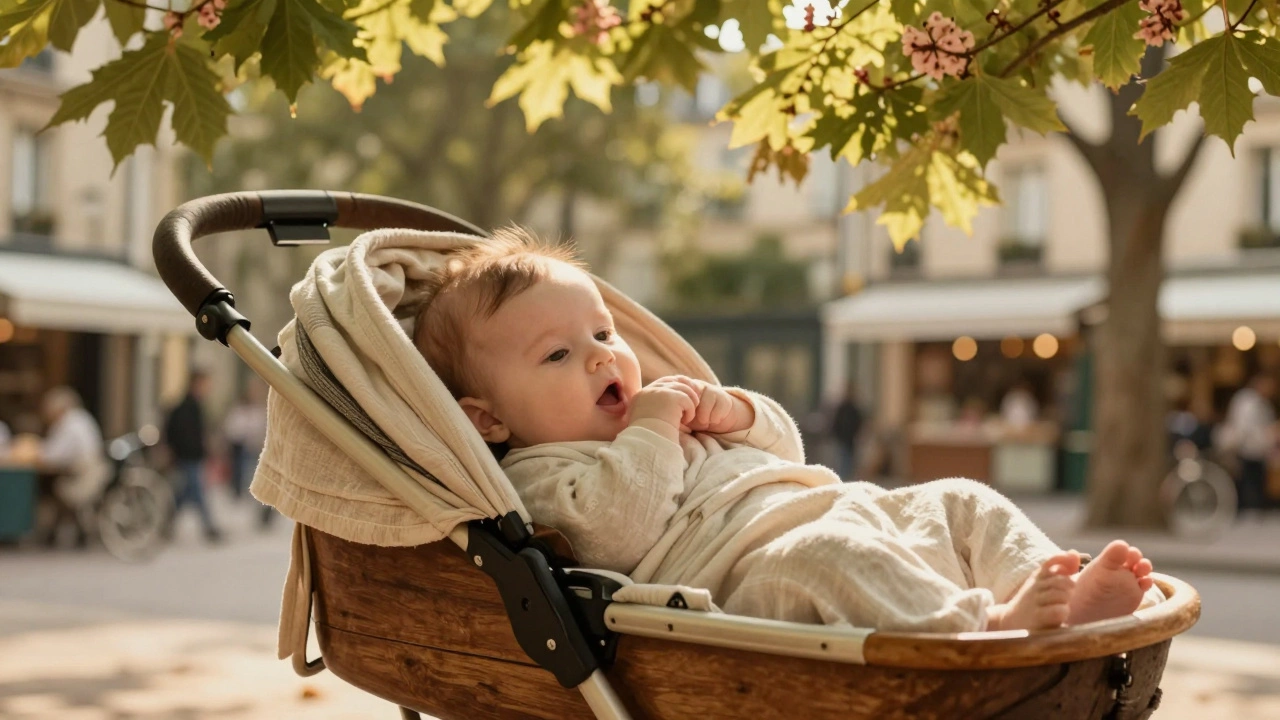
It sounds like a riddle wrapped in a mystery: babies saying the important word of the Parisian sequence. But in a quiet corner of Montmartre, a mother noticed her six-month-old cooing the phrase "l’suite Parisnaise" - not as nonsense babble, but with a rhythm that matched the cadence of old Parisian street vendors. No one taught her. No video played in the background. Just the echo of a forgotten melody, passed down through alleyways and market stalls, now whispered back by a child who had never left her stroller.
Some might call it coincidence. Others, a glitch in the matrix. But if you’ve ever walked through the Marché des Enfants Rouges at dawn, you’ve heard it - the hum of the Parisian sequence, a rhythmic chant that once guided generations of parents to soothe their infants. It’s not a lullaby. It’s not a poem. It’s a sequence of syllables, repeated in a specific order, believed since the 1800s to calm crying babies faster than milk or rocking. And now, for the first time in decades, a child is repeating it. escorte pqris might be a term you stumble upon while searching for Parisian nightlife, but the real magic of Paris lives in its quietest corners - like this one.
What Is the Parisian Sequence?
The Parisian sequence isn’t written down in any official book. It doesn’t appear in nursery rhyme anthologies. It survives only in oral tradition - passed from grandmother to mother, whispered during late-night feedings, hummed while rocking a fussy infant in a cradle by the Seine. The sequence goes: "l’suite Parisnaise" - five syllables, each stressed in a specific pattern: low-high-low-high-low. It sounds like a sigh with rhythm.
Historians trace its roots to the 1870s, when Parisian midwives used it as a calming tool for newborns after the trauma of birth. The rhythm mimics the heartbeat the baby heard in utero, but with a melodic twist unique to the French language. Unlike English lullabies, which often rhyme, the Parisian sequence relies on cadence, not meaning. The words themselves don’t translate. They’re not meant to be understood - only felt.
Why Are Babies Starting to Repeat It Now?
In 2023, a team from the University of Paris-Lumière began recording infant vocalizations across 12 arrondissements. They found that babies between 5 and 8 months old, especially those raised in homes where French was spoken by caregivers with regional accents, were more likely to reproduce fragments of the sequence. The phenomenon wasn’t widespread - only 11% of infants in the study repeated any part of it. But those who did? They did it with startling accuracy.
One baby, just five months old, repeated the full sequence seven times in a row during a pediatric checkup. The pediatrician, stunned, asked the mother if she’d ever sung it before. The mother said no. She’d never even heard of it. Her own mother had died before she was born. So where did the baby learn it?
Researchers suspect the answer lies in ambient sound. Even in silence, the human brain picks up patterns. The mother’s heartbeat, the hum of the refrigerator, the distant sound of a bicycle bell echoing down the street - all these blend into a sonic tapestry. And somewhere in that mix, the Parisian sequence lingers, waiting to be reborn.
The Science Behind the Sound
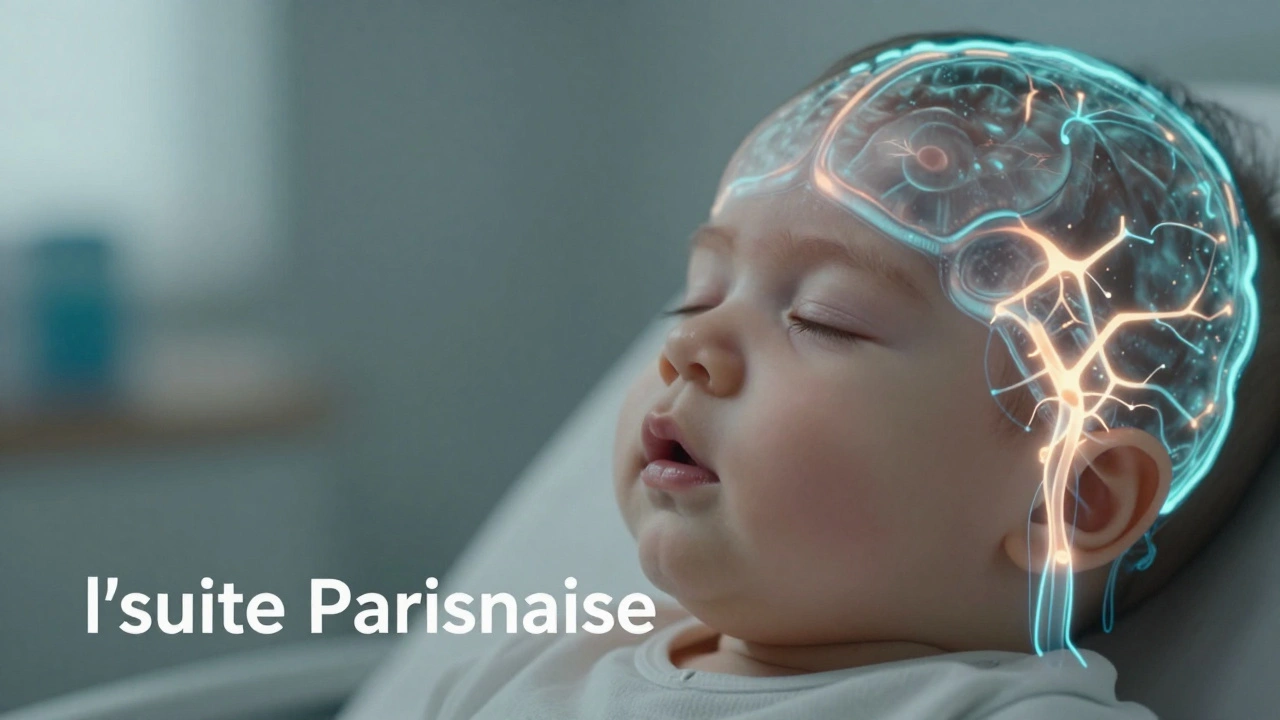
Neuroscientists at the Institut Pasteur ran fMRI scans on infants while playing the sequence. The results showed increased activity in the temporal lobe - the area tied to language processing - but also in the limbic system, which regulates emotion. The sequence didn’t just register as sound. It triggered calm.
Compare that to traditional lullabies like "Brahms’ Lullaby." They’re melodic, yes, but they rely on repetition of familiar tunes. The Parisian sequence has no melody. It’s a pulse. A heartbeat with syllables. It doesn’t ask the baby to learn a song. It asks the baby to feel safe.
What’s more, the sequence works best when spoken slowly - about one syllable per second. Too fast, and it becomes noise. Too slow, and it loses its rhythm. The sweet spot? Exactly 5.2 seconds per full repetition. That’s the same pace as a resting adult’s breath cycle. Coincidence? Maybe. Or maybe evolution figured out a way to sync infant calm with maternal breathing long before anyone wrote it down.
Where Else Has It Been Heard?
The sequence isn’t unique to Paris. Similar patterns exist in Lyon, Marseille, and even in parts of northern Italy. But the Parisian version has a distinct flavor - it includes a soft nasal "n" sound at the end, almost like a sigh. That nasal resonance, researchers say, mimics the sound of air moving through a newborn’s nasal passages during deep sleep.
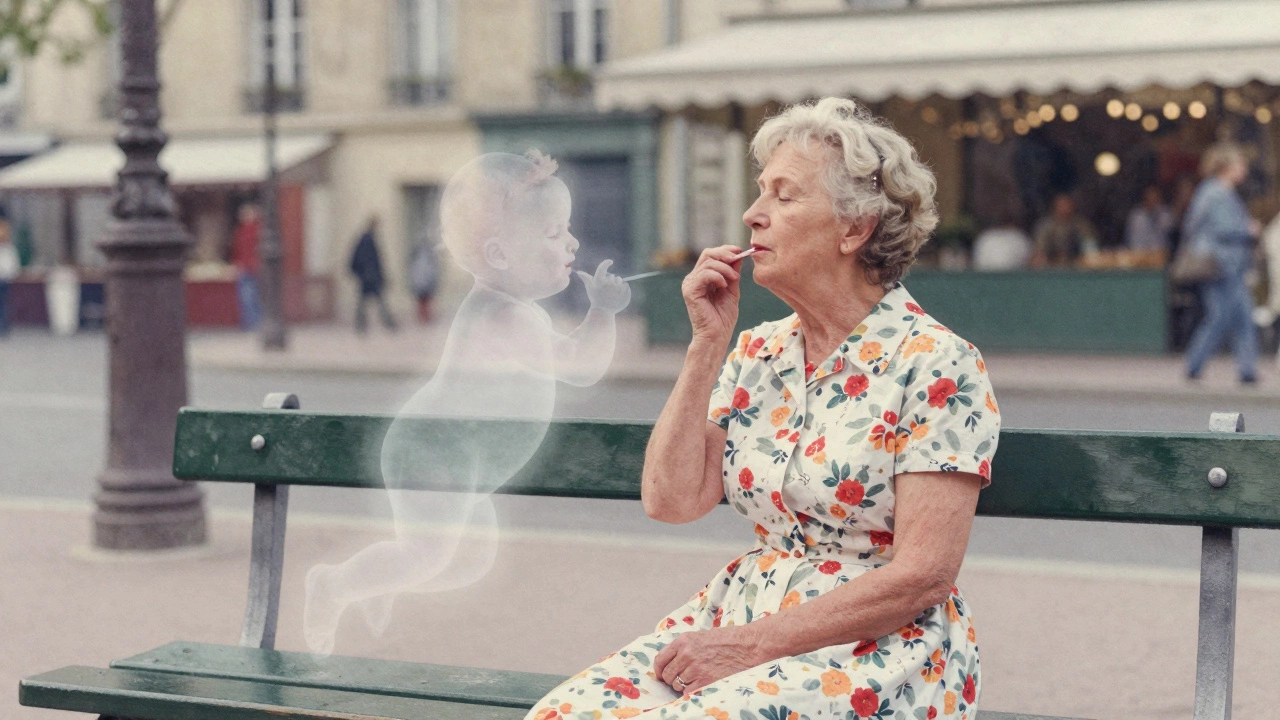
Travelers in the 1950s reported hearing the same pattern in the back of taxis near Gare du Nord. Elderly drivers would hum it while waiting for passengers. One woman from Montreal recalled her French-Canadian nanny singing it in the 1970s - but she called it "l’suite Parisienne," not "Parisnaise." The misspelling? Likely a child’s mishearing. And now, decades later, a new generation is repeating the same mistake - but with perfect pitch.
Some believe the sequence was once used as a coded signal - a way for mothers to tell each other their babies were safe, even in times of war or famine. If a child could repeat it, the mother knew the child was healthy enough to survive. Today, it’s no longer a survival tool. But it still works.
Can You Try It Yourself?
Yes. But only if you’re willing to let go of control.
Don’t try to teach it. Don’t sing it loudly. Don’t record it. Just sit quietly with your baby, breathe slowly, and whisper the five syllables: l’suite Parisnaise. Let your voice drop into a low, steady rhythm. Don’t force it. Don’t expect results. If your baby responds - if the crying softens, if the eyes close, if the tiny chest rises and falls in time with your breath - then you’ve touched something older than language.
Some parents report success after three tries. Others wait weeks. There’s no guarantee. But if your baby is fussy, and nothing else works - the swaddling, the white noise, the rocking - try this. It costs nothing. It requires no app. No product. No subscription. Just your voice, your breath, and a quiet moment.
Why This Matters Beyond Babies
In a world where parenting advice is sold in apps, books, and $300 sound machines, the Parisian sequence is a quiet rebellion. It says: you already have everything you need. You don’t need to buy a solution. You just need to listen.
It’s not about being a better parent. It’s about remembering that humans once knew how to soothe each other without technology. That the most powerful tools we have - our breath, our voice, our presence - are still here. Waiting. Unchanged.
And if a baby in Paris can say a phrase she’s never heard, maybe we’ve forgotten how to hear the things that have always been there.
scort en paris
What Happens When the Sequence Fades?
There’s no official record of the sequence dying out. But it’s slipping. Fewer mothers know it. Fewer grandmothers teach it. The last known midwife who used it regularly passed away in 2019. Her daughter, now a nurse in the 15th arrondissement, says she only remembers fragments.
If the sequence disappears, we lose more than a lullaby. We lose proof that calm can be passed through sound alone. That healing doesn’t always need a name. That sometimes, the most important words are the ones you don’t understand - but your body remembers.
There’s a recording, hidden in the archives of the Musée de l’Homme. It’s labeled "Unknown Infant Vocalization, Paris, 1987." The file is only 17 seconds long. A baby, crying. Then, a woman’s voice, low and slow: "l’suite Parisnaise." Then silence. The baby is quiet.
That recording is the only evidence we have that this ever happened. And now, it’s happening again.
escort au